Indian IT Sector Faces Slow Growth in 2026: What's Driving the Slowdown?
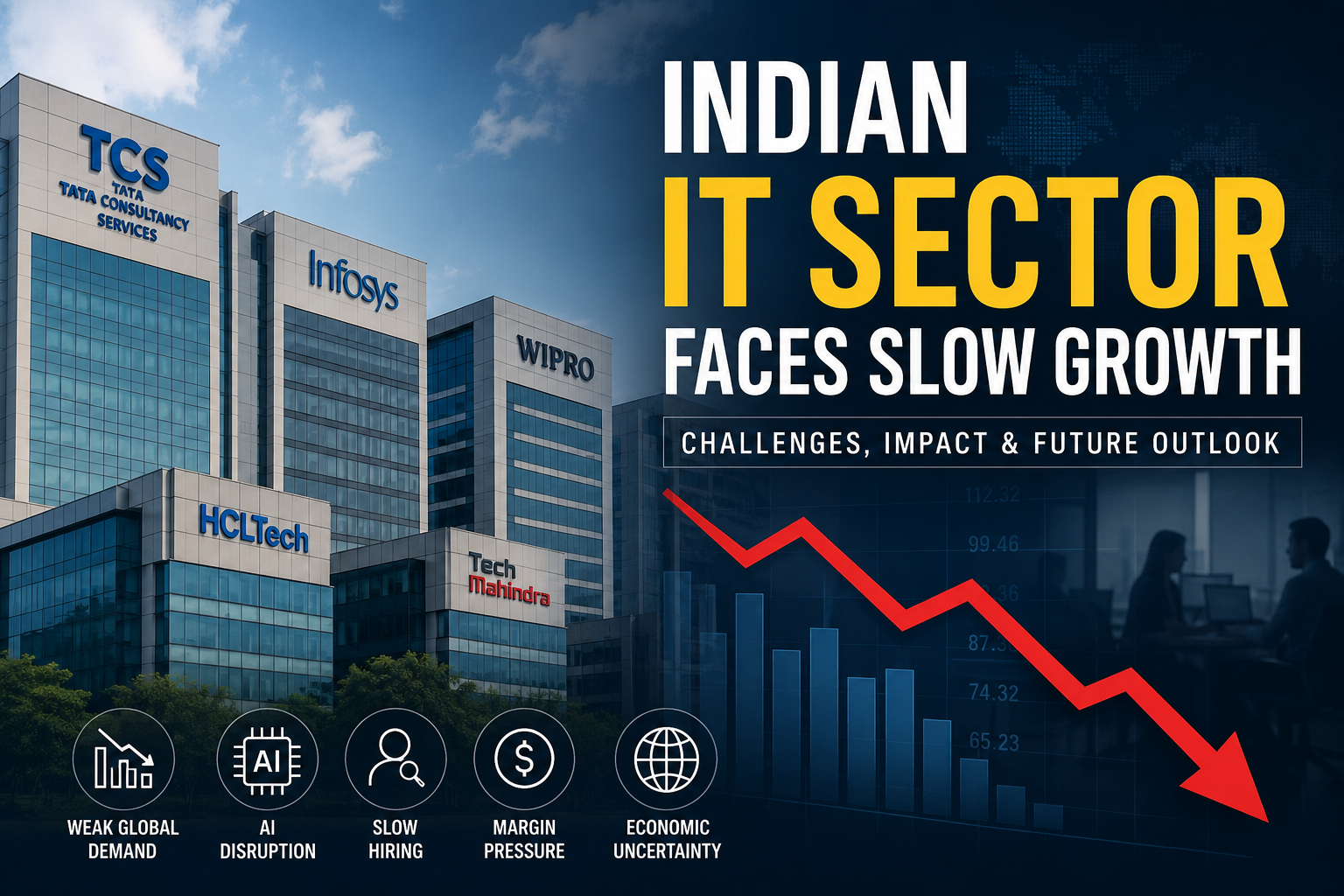
India's IT sector, long the engine of the country's services exports, is passing through one of its most difficult phases in two decades. Weak global demand, cautious client spending and the rapid rise of artificial intelligence have combined to slow growth across the Indian IT industry in 2026.The June-quarter (Q1 FY27) results from TCS, HCLTech, Wipro and Tech Mahindra confirm the trend. Revenue is still growing — but slowly, and mostly in low single digits in constant currency. Investors, employees and freshers are all asking the same question: is this a temporary dip or a structural reset?
Indian IT Sector Growth in 2026: Where the Industry Stands
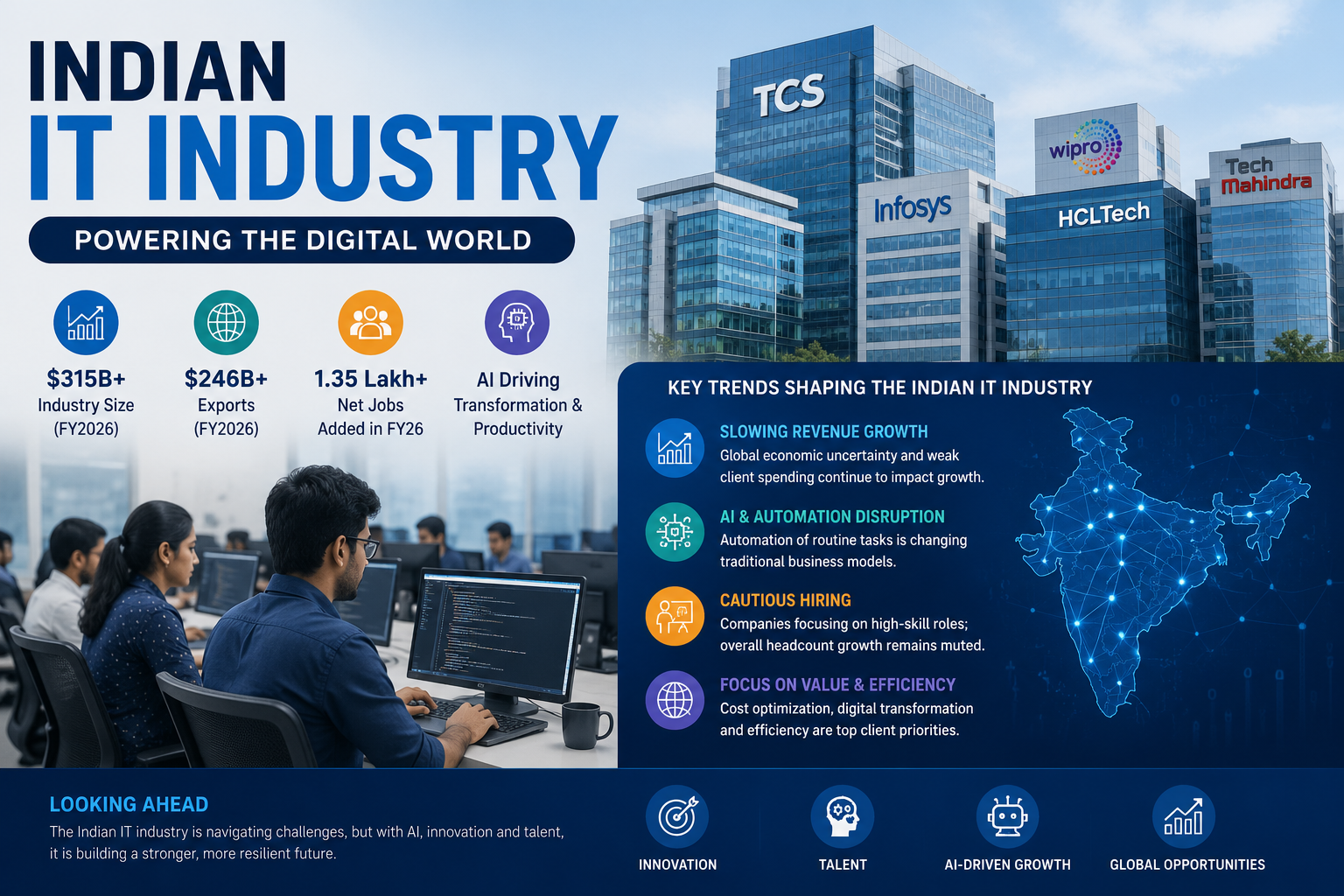
According to NASSCOM's Annual Strategic Review 2026, Indian tech industry revenue is estimated at $315 billion in FY26, up 6.1% from a revised $297 billion in FY25. Exports are estimated at around $246 billion.That headline number hides the stress. Growth of ~6% is far below the double-digit expansion the IT sector delivered for most of its history, and headcount grew just 2.3% — only about 1.35 lakh net jobs added — showing that revenue and hiring have decoupled.The stock market has been harsher. In early February 2026, the Nifty IT index fell roughly 19% in just eight trading sessions, wiping out close to $50 billion in market value — its sharpest fall since the 2008 crisis. By early July 2026, the combined market capitalisation of the top five IT companies had dropped more than 46% from its August 2024 peak, and TCS lost its long-held position as India's most valuable listed company to Reliance Industries.
Key Reasons Behind the Slowdown
Weak global IT demand:
The US accounts for roughly 54–55% of India's IT exports. Cautious discretionary spending by American and European clients is directly shrinking deal pipelines. Accenture's June 2026 decision to cut its annual growth guidance to 3–4% (from 3–5%) triggered a global sell-off, dragging the Nifty IT down about 6% to a three-year low.
AI-led pricing pressure:
Clients now expect AI-driven productivity gains to be passed back as lower billing, squeezing the traditional time-and-material model.
Automation of routine work:
Agentic AI tools are automating coding, testing and maintenance — the bread-and-butter of the Indian IT slowdown story, since these services built the sector's headcount-led growth model.
Geopolitical and policy headwinds:
The West Asia conflict, tariff uncertainty and the steep $100,000 H-1B visa fee announced by the US in late 2025 have delayed client decision-making.
Foreign investor exit:
FIIs pulled an estimated ₹74,000+ crore out of Indian IT stocks through 2025, pushing holdings to multi-year lows.
Margin pressure:
Annual wage hikes plus heavy AI investments compressed margins — TCS at 24% and Wipro at 15.6% (down 170 bps sequentially) in Q1 FY27.
AI Impact on Indian IT: A Structural Shift, Not Just a Cycle, Indian IT Sector Faces Slow Growth
What makes 2026 different from earlier downturns is the explanation behind it. Previous slowdowns were blamed on over-hiring or macro cycles. This time, the AI impact on Indian IT is forcing a repricing of the entire business model.For decades the formula was simple: more engineers meant more revenue. Agentic AI breaks that link by automating routine development and maintenance work.Yet AI is also the biggest new opportunity. NASSCOM estimates AI-related revenue at $10–12 billion in FY26, TCS already reports a $2.6 billion AI annualised run rate, and over 20 lakh professionals have been upskilled in AI. Digital transformation demand has not disappeared — it is changing shape, moving toward outcome-based and AI-led deals.